Grid List Quotes Pictures Events
Loading Full Historical Timeline
Loading Full Historical Timeline

in 1833
in Britain
In of used 1 3 of its national budget to buy all slaves their freedom See more images: tco 2rHar1E8H2 tco ZX2sNe28Bn
![Picture of Charles Dickens in 1833 Austin, Miss [Amelia]. ALS to [1833 Apr. 6?]](http://images.nypl.org/index.php?id=5109122&t=w)


in 1833
"It is important also to consider, that the surest means of avoiding war is to be prepared for it in peace."
in 1833
"How much more do they deserve our reverence and praise, whose lives are devoted to the formation of institutions, which, when they and their children are mingled in the common dust, may continue to cherish the principles and the practice of liberty in perpetual freshness and vigour."
in 1833
"Without justice being freely, fully, and impartially administered, neither our persons, nor our rights, nor our property, can be protected. And if these, or either of them, are regulated by no certain laws, and are subject to no certain principles, and are held by no certain tenure, and are redressed, when violated, by no certain remedies, society fails of all its value; and men may as well return to a state of savage and barbarous independence."
in 1833
"Let the American youth never forget, that they possess a noble inheritance, bought by the toils, and sufferings, and blood of their ancestors; and capacity, if wisely improved, and faithfully guarded, of transmitting to their latest posterity all the substantial blessings of life, the peaceful enjoyment of liberty, property, religion, and independence."
in 1833
"The truth is, that, even with the most secure tenure of office, during good behavior, the danger is not, that the judges will be too firm in resisting public opinion, and in defence of private rights or public liberties; but, that they will be ready to yield themselves to the passions, and politics, and prejudices of the day."
in 1833
"And it is no less true, that personal security and private property rest entirely upon the wisdom, the stability, and the integrity of the courts of justice."
in 1833
"The plain import of the clause is, that congress shall have all the incidental and instrumental powers, necessary and proper to carry into execution all the express powers. It neither enlarges any power specifically granted; nor is it a grant of any new power to congress. But it is merely a declaration for the removal of all uncertainty, that the means of carrying into execution those, otherwise granted, are included in the grant."
in 1833
"The constitution of the United States is to receive a reasonable interpretation of its language, and its powers, keeping in view the objects and purposes, for which those powers were conferred. By a reasonable interpretation, we mean, that in case the words are susceptible of two different senses, the one strict, the other more enlarged, that should be adopted, which is most consonant with the apparent objects and intent of the Constitution."
in 1833
"The true test is, whether the object be of a local character, and local use; or, whether it be of general benefit to the states. If it be purely local, congress cannot constitutionally appropriate money for the object. But, if the benefit be general, it matters not, whether in point of locality it be in one state, or several; whether it be of large, or of small extent."
in 1833
"In a general sense, all contributions imposed by the government upon individuals for the service of the state, are called taxes, by whatever name they may be known, whether by the name of tribute, tythe, tallage, impost, duty, gabel, custom, subsidy, aid, supply, excise, or other name."
in 1833
"On the other hand, the duty imposed upon him to take care, that the laws be faithfully executed, follows out the strong injunctions of his oath of office, that he will preserve, protect, and defend the constitution. The great object of the executive department is to accomplish this purpose; and without it, be the form of government whatever it may, it will be utterly worthless for offence, or defence; for the redress of grievances, or the protection of rights; for the happiness, or good order, o"
in 1833
"There is little need of commentary upon this clause. No man can well doubt the propriety of placing a president of the United States under the most solemn obligations to preserve, protect, and defend the constitution. It is a suitable pledge of his fidelity and responsibility to his country; and creates upon his conscience a deep sense of duty, by an appeal, at once in the presence of God and man, to the most sacred and solemn sanctions, which can operate upon the human mind."

in 1833
A new map of Pennsylvania : with its canals, rail-roads & distances from place to place along the stage roads
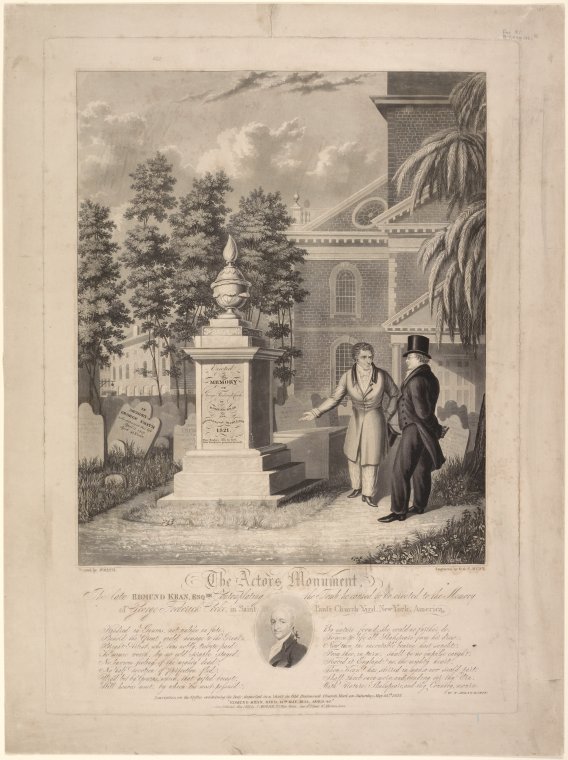
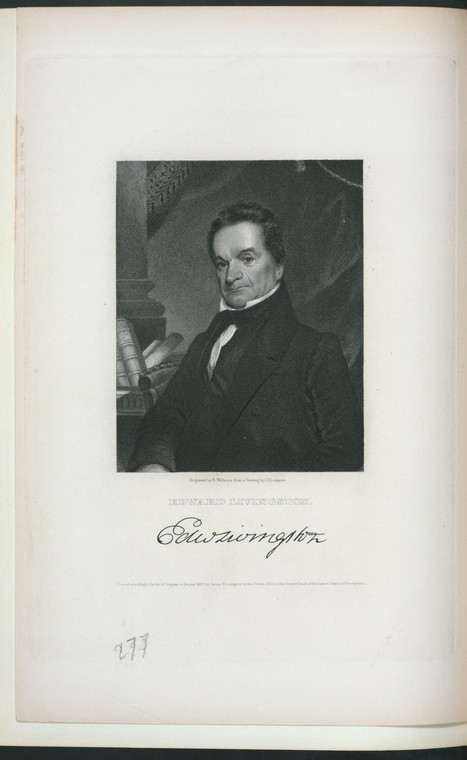
in 1833
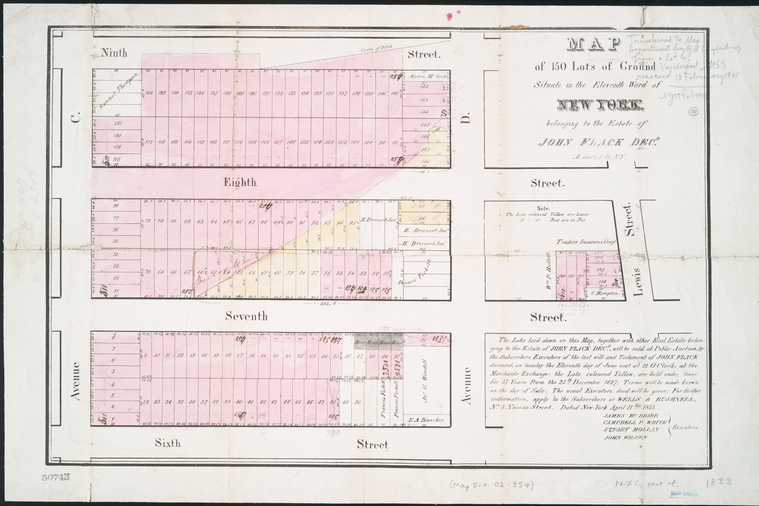
Map of 150 lots of ground situate in the eleventh ward of New York belonging to the estate of John Flack, decd.


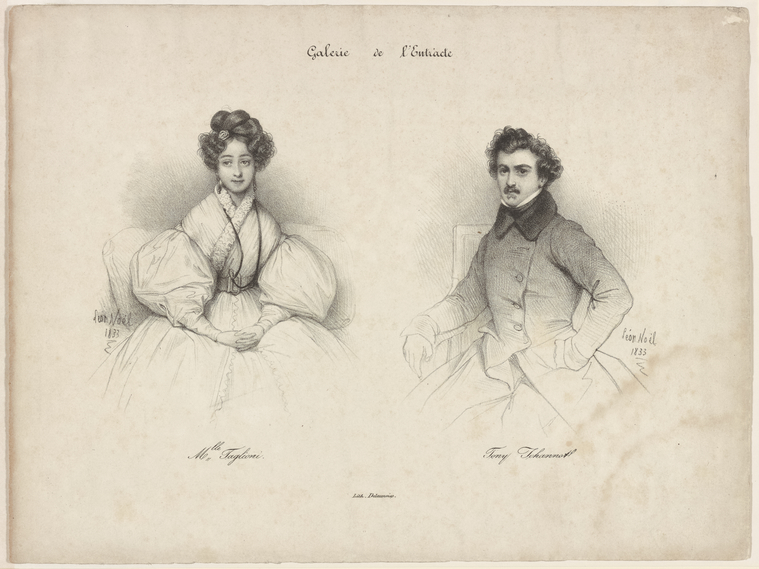


in 1833
" Mr. Augustus Minns was a bachelor, of about forty as he said — of about eight-and-forty as his friends said. He was always exceedingly clean, precise, and tidy: perhaps somewhat priggish, and the most retiring man in the world."
in 1833
" There were two classes of created objects which he held in the deepest and most unmingled horror: they were, dogs and children. He was not unamiable, but he could at any time have viewed the execution of a dog, or the assassination of an infant, with the liveliest satisfaction. Their habits were at variance with his love of order; and his love of order, was as powerful as his love of life."


